
Presented by Pinkolor Store – Where Personalized Style Meets Innovation
Table of Contents
- Introduction
- What is Traditional Embroidery?
- What is Embroidery Digitizing?
- Key Differences: Traditional vs. Digitized Embroidery
- Pros & Cons of Traditional Embroidery
- Pros & Cons of Embroidery Digitizing
- Applications & Use Cases in 2025
- Sustainability and Innovation in Modern Embroidery
- Why Pinkolor Store Supports Both
- Final Verdict: Which Should You Choose?
- FAQs
- Meta Description
1. Introduction
As the textile and gift industries evolve in 2025, so does embroidery. Once entirely handmade, embroidery has grown into a high-tech process thanks to digitization. But that begs the question: Is modern embroidery better than the traditional method? Or is there still value in old-school craftsmanship?
In this in-depth comparison by Pinkolor Store, we’ll explore the contrasts between embroidery digitizing and traditional embroidery, so you can understand their unique strengths, applications, and relevance today.
2. What is Traditional Embroidery?
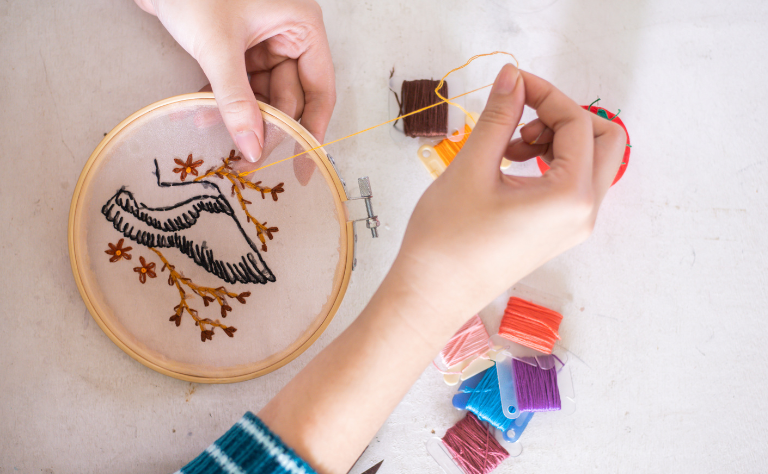
Traditional embroidery refers to the age-old craft of stitching designs into fabric using a needle, thread, and manual effort.
Techniques include:
- Cross-stitch
- Satin stitch
- Chain stitch
- French knots
- Running stitch
This method dates back centuries and often involves hand-drawn patterns, freehand needlework, and rich textures.
Characteristics:
- Handmade
- Labor-intensive
- Limited to human precision
- High sentimental and artistic value
3. What is Embroidery Digitizing?
Embroidery digitizing is the process of converting artwork, logos, text, or images into a digital embroidery file using specialized software (like Wilcom, Hatch, or Ink/Stitch). This file instructs computerized embroidery machines on how to stitch the design.
Components:
- Vector art conversion
- Stitch types (satin, fill, run)
- Stitch density
- Color layering
Characteristics:
- Automated
- Faster production
- Consistent quality
- Scalable for mass production
4. Key Differences: Traditional vs. Digitized Embroidery
| Aspect | Traditional Embroidery | Embroidery Digitizing |
|---|---|---|
| Method | Hand-stitched | Machine-stitched using digitized file |
| Speed | Slow and time-consuming | Fast and efficient |
| Consistency | Varies by artisan | Highly consistent |
| Complexity | Limited to skill level | Can handle complex designs easily |
| Customization | Unique per piece | Easily replicable |
| Labor | Manual labor-intensive | Software + machine |
| Cost | Higher due to time | Lower per item for bulk |
| Texture | Richer, more tactile | Smooth, precise finishes |
5. Pros & Cons of Traditional Embroidery
✅ Pros:
- Unique, one-of-a-kind artistry
- Greater emotional value
- Excellent for heirlooms or luxury gifts
- Rich textures and thread variations
❌ Cons:
- Not scalable for bulk
- Time-consuming
- Risk of human error
- Costly due to labor
6. Pros & Cons of Embroidery Digitizing
✅ Pros:
- Fast production
- Great for business branding and merchandise
- Ideal for complex designs (e.g., logos, portraits)
- Cost-effective for large batches
- Uniform quality
❌ Cons:
- Lacks artisanal touch
- Dependent on software/machine quality
- May appear too “perfect” or mechanical
7. Applications & Use Cases in 2025
Traditional Embroidery:
- High-end fashion
- Wedding dresses
- Hand-stitched art pieces
- Cultural garments
- Boutique and heirloom items
Embroidery Digitizing:
- Corporate merchandise (caps, shirts, jackets)
- Personalized gifts (towels, bags, pillows)
- School uniforms
- Sportswear
- Etsy shops & online customization stores
8. Sustainability and Innovation in Modern Embroidery
In 2025, consumers are looking for eco-conscious and ethical products.
Digitizing’s Role:
- Less fabric waste due to precision
- Efficient thread use
- Reduced energy consumption when scaled
Traditional Embroidery’s Role:
- Encourages slow fashion
- Supports local artisans
- Natural materials often used
Pinkolor Store promotes eco-friendly threads, recycled materials, and efficient digitizing practices to balance tradition with technology.
9. Why Pinkolor Store Supports Both Methods
At Pinkolor Store, we don’t believe it’s about choosing sides. It’s about matching the right technique to the right occasion.
We use embroidery digitizing for:
- Custom logo wear
- Personalized baby items
- Quick-turnaround gifting needs
And we reserve traditional embroidery for:
- Custom heirlooms
- One-of-a-kind décor
- Luxury bridal or cultural wear
This duality allows us to serve a broader customer base while staying true to artistry and innovation.
10. Final Verdict: Which Should You Choose?
There’s no definitive “winner”—just the right fit for your purpose.
| If You Want… | Choose |
|---|---|
| Bulk orders with consistent quality | Embroidery Digitizing |
| A deeply personal, handmade feel | Traditional Embroidery |
| Custom corporate branding | Digitizing |
| A luxury wedding keepsake | Traditional |
| Fast turnaround for gifts | Digitizing |
| A high-value collectible | Traditional |
Pinkolor Store is proud to help you choose the right embroidery style, with professional consultation, previews, and both handwork and digital options available.
11. FAQs
Q1: Is embroidery digitizing cheaper than traditional embroidery?
Yes, especially for bulk orders. Digitized designs require upfront setup but are more cost-effective long term.
Q2: Can traditional embroidery replicate photo-like detail?
Not easily. Photo-realistic detail is better achieved with digitizing due to its precision.
Q3: What if I want something unique and imperfect?
Go traditional. The slight irregularities are part of the charm.
Q4: Can I request both styles for a single gift?
Absolutely! At Pinkolor Store, we offer hybrid options combining hand and machine embroidery.
Q5: Do you offer custom embroidery digitizing services?
Yes! We digitize logos, portraits, handwriting, and more. Just send us your image or idea.